Allendale Co-op Timeline
From humble beginnings in a wash house in 1874, the 'Allendale Industrial and Provident Society' grew rapidly to become a central part of life in the dale.
Part One of this timeline tells the story of the first 70 years of this store; its staff, premises and activities in the dale from 1874 until the outbreak of the Second World War. This period brought much upheaval in England, which was reflected in the daily lives, sales and personalities of Allendale's Co-op.
In association with the Allen Valleys Local History Group. Research and text by Jared Dunn. The early photographs have been colourised.
1844-1874
A co-operative background
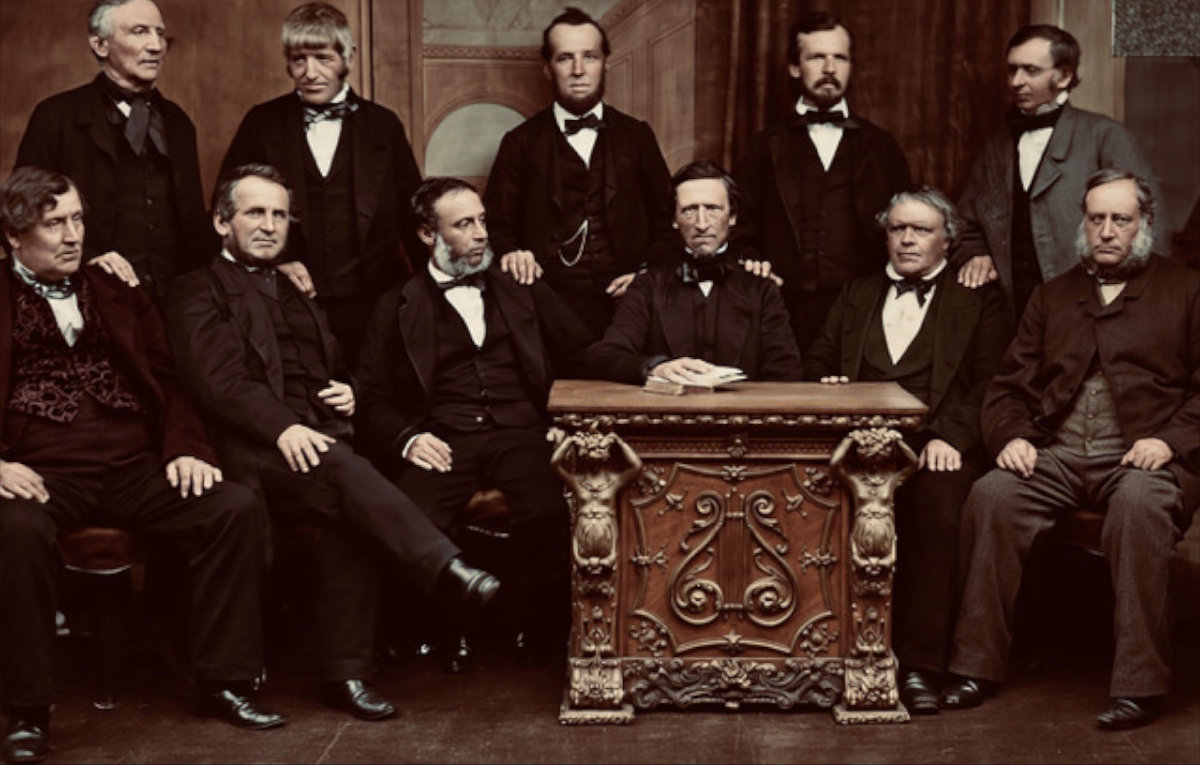
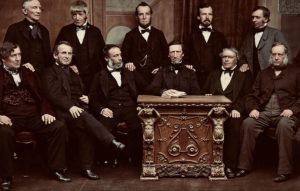
The Rochdale Pioneers, public domain
1844
The Rochdale Society of Equitable Pioneers is founded; it forms the basis for the modern co-operative movement and aims to provide high-quality, unadulterated goods to consumers and a sales dividend to members.
At that time, UK foodstuff sales are largely unregulated. Cheap flour might be found to be adulterated with chalk, whilst tea leaves might be mixed with sawdust.
1844: 21 DECEMBER
The Rochdale Pioneers open their first store selling butter, sugar, flour and oatmeal. Within three months, they expand their offer to include tea and tobacco; they provide high-quality, unadulterated goods to local consumers.
1863
Other independent societies that form in the years after 1844 now come together as the Co-operative Wholesale Society (CWS). This gives them greater buying power and facilitates the production of their own branded goods.
1874-1883
'Working together with a will'
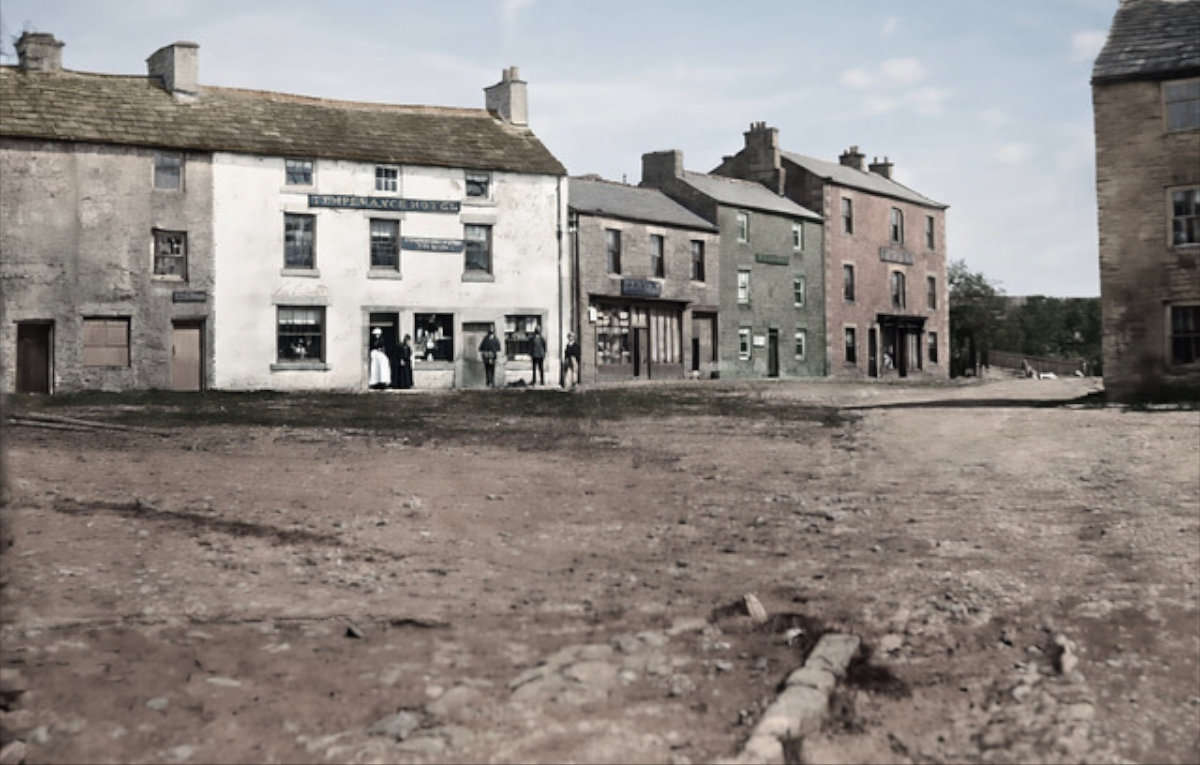
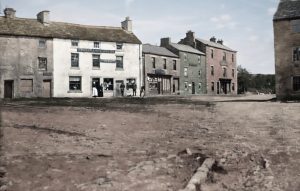
Allendale Square in 1875 © Jared Dunn
1874
Thirty years after the Rochdale pioneers, a group of ten Allendonians establish the ‘Allendale Provident & Industrial Society’ on similar principles. It won't be renamed 'Allendale Co-operative Society' until 1945. It is established as (and remains in 2025) an independent co-operative although it formed a close operating relationship with the wider Co-operative Wholesale Society (CWS).
Each founding member contributes £5 (or £475 today) to set up the Society. Among them is John Ridley – who lived until 1937 to tell the tale. John's brother William is a fellow founder alongside Nicholas Brown, who becomes the Society's president. Of the remaining 7, a number of possible names crop up in later records but no document is known to definitively list them.
1874: DECEMBER
Allendale Provident & Industrial Society opens its first store in Allendale Town at ‘Bank House’. That first store is located in what later becomes the washhouse of the Temperance Hotel (and in 2025 is 'The Dale Cottage' holiday accommodation). It is about 150m from the current supermarket.
At this time, there are several grocery stories in the town; most are privately run and some operate out of people's front rooms. Allendale Town also contains a fruit store, several cobblers and bootmakers and two draperies. In 1874, the new Society store is just one of several in the town.
1875
The customer experience is very different to today. Local shoppers order at a wooden counter from a single shop hand – believed to be Thomas Dickinson, who is the Society's first recorded manager. He brings items to the counter from shelves behind him and tots up what is owed on notepaper.
In July 1875, the ten founders come together to review the first six months of trading. Flour is an early best-seller, making a profit of 1 shilling (or £6 in 2025) per 20st bag. In its first year, the little shop achieves the 2025 equivalent of £267k in sales and both sales and membership grow rapidly.
Describing Allendale's store in its first year, the Hexham Courant characterises it as showing ‘clearly what working men can do towards promoting their own good when they set to work with a will’.
1876
As with other co-operatives, members of Allendale's Society are issued with a dividend every six months.
A member's dividend is a cash payment returned to them at an agreed percentage – generally 10% – of that member's purchases. The percentage amount is determined by the board and relates to the Society's current profitability. In 1875/6, members agree to forgo their dividends and plough them back into the new store to help further establish it.
1877: October
A growing business requires bigger premises. Across the Square a building called Curtain House becomes available.
Rebecca Atkinson sells Curtain House – the draper’s shop and adjoining house that she had inherited from her father – for £210 (£20,500 in 2025) to the 'Allendale Industrial Provident Society’.
This Curtain House used to stand on the site of the modern supermarket – in the area of 2025's hardware, spices and canned goods aisles ...
1880
A new manager is appointed – one who would become the longest serving manager in the Co-op’s history. John Joseph Allison was born in Catton in 1845, the son of a lead-ore smelter who lived at Allen Mill Cottages. He soon moves to Leadgate, closer to the store.
Business continues to grow strongly; a shop boy is engaged at 4 shillings a week (£9.9k pa in 2025). Sugar is packaged in plain blue bags – without any writing or branding. The colour-coding of bags was important as some people could not read. Granulated sugar at the Co-op is still sold in blue-branded bags in 2025.
1884-1893
Decline in the dale
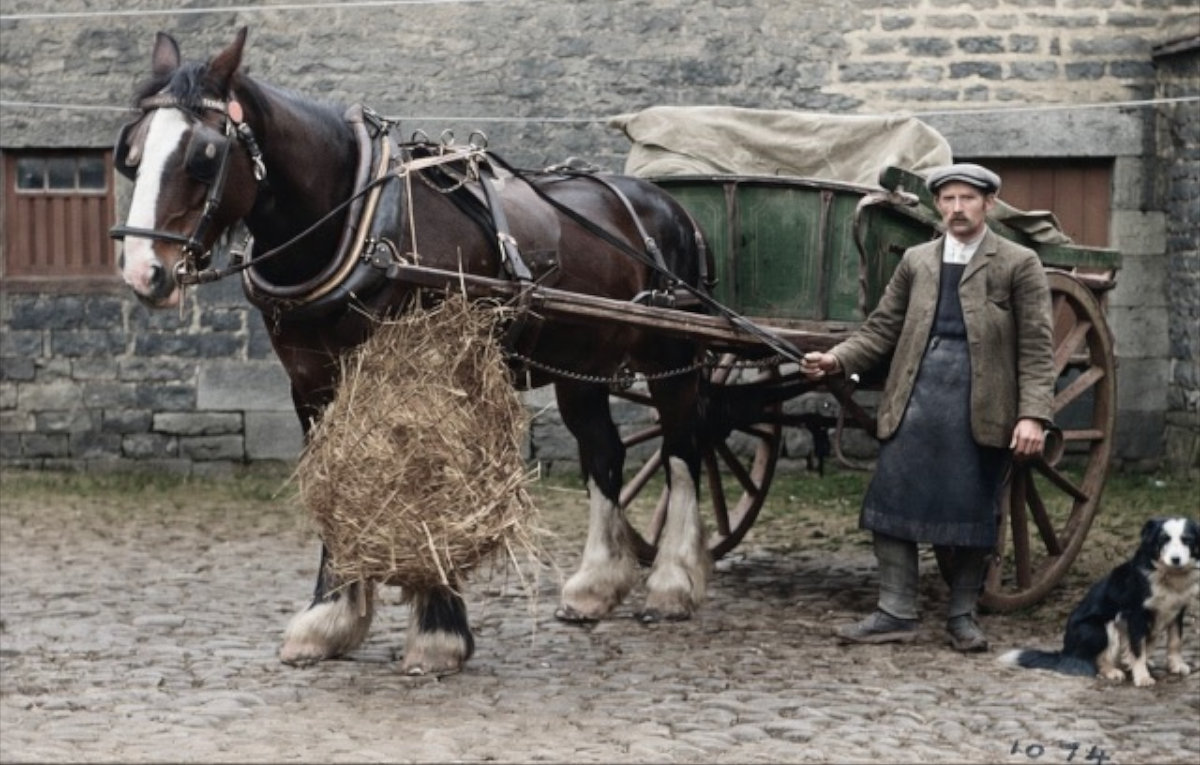
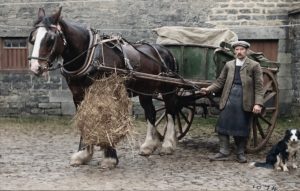
Store man and horse © Allendale Co-operative Society Ltd
1886
Three pairs of hands are needed. John Allison has taken on a shop hand (William Lowery) and increases Lowery's salary to 10 shillings a week (or £19k pa in 2025). William Makepeace replaces John Graham as shop boy but still only earns 4 shillings.
Allison has proved to have made a wise decision in leaving his lead smelting role to become store manager. The lead-mining industry decline accelerates in the 1880s, with the price of lead falling from £21 per ton in the 1850s to just £9.50 per ton in the 1890s. Will the Allendale Provident & Industrial Society store be able to sustain its growth?
1886
More staff are needed due to increased patronage and a growing product range. As well as groceries, and some drapery items, the store is selling tonnes of animal feed each year to local farmers.
Animal 'feeding stuffs' comes to represent a significant part of the store's business, with 'cotton cake' (compressed cottonseed) a best seller in 1886 for sustaining cattle through winter.
Cattle feed is comparatively much more expensive in 2025; modern cottonseed is £325 a tonne – over ten times its equivalent 1886 price.
1888: 10th February
The store does their banking across the Square at the Cumberland Bank (which is later demolished to make way for the Heatherlea).
Wilson Liddell retires as the Society's treasurer and goes to the Cumberland bank to update the store's banking details. He receives a handsome gift of a purse containing 2 guineas on his retirement.
1889: 7th May
The building next door to the Society's store (between it and the Golden Lion) is offered for auction. It is 'a free, fully-licensed public house, known by the name of the "Shoulder of Mutton", situate in Allendale Town' with a 3-stalled stable, yard and 5.5 acres of pasture land. It fails to sell.
1892
Allendale Co-op has always had a strong tradition of supporting local organisations and this is evident from its earliest times.
Local schools are regular beneficiaries; donations are made in 1892 to four schools in Catton, Keenley, Allendale Town and Sinderhope. The donations aren't insignificant – together they represent the weekly wages of 1.5 people.
In 1892, the Society also donates 5 shillings worth of 'Goods to (the) Reading Room’, a 'cheese to the Rifle Volunteers' and '£2 to The Royal Victoria Infirmary'.
Many of these arrangements are repeated year after year with an emphasis on direct support for local initiatives.
1894-1903
Foundations for today's store
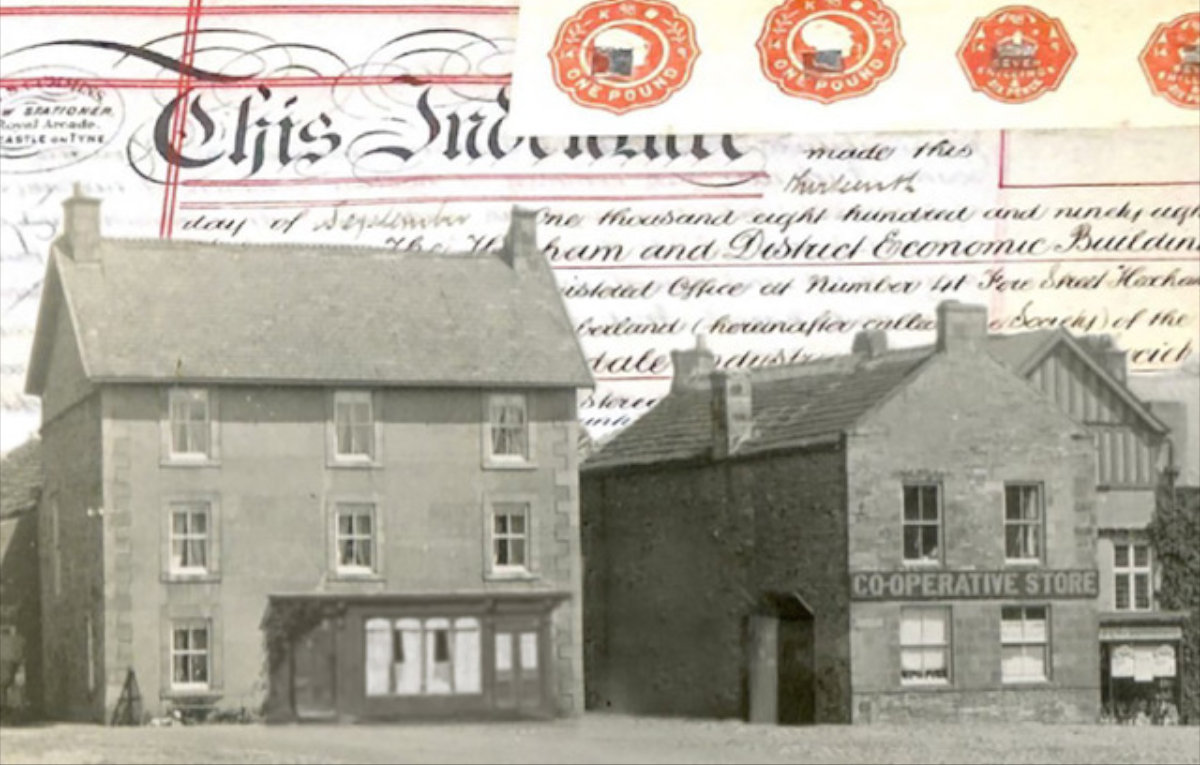
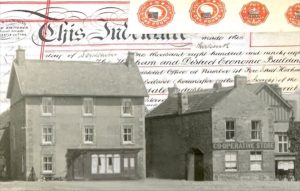
1890s store and manager's house © Allendale Co-operative Society Ltd; Jared Dunn
1896
The Society's business is thriving; 5 staff are employed in the store as it operates a profitable grocery business with significant sales generated from agricultural feedstuffs.
Business is so good that the member dividend reaches its highest level (1874-2025) in returning a 16% dividend back to members on purchases they’d made in 1896.
1896: 20th January
It is agreed that four hams be cooked for the new year 'Social'. Annual social events for members are held at Bride’s Hill and later at Allendale Board School.
These 'socials' take the form of coffee suppers, which are considered a genteel way to spend an evening in the late 19th century. Coffee is served with sandwiches and biscuits, often with a musical accompaniment from the Allendale Drum & Fife Band (1894) and the Frazer Philharmonic Band (1890).
Up to 230 people attend these evenings. In April 1900, Mr Temperley suggests that a 'Pic-nic' be held in the summer instead of the regular annual coffee supper. A resulting vote is deadlocked between the two options, and the matter is ‘dropped for the present’.
1898: 13th September
The Shoulder of Mutton has been taken down and rebuilt in 1891 and a butcher, John Robson, sells the rebuilt property to the Society in 1898. With this purchase, the Society now owns Curtain House (the store) and the property immediately adjacent to the North. This new property becomes the store manager's house for John Allison and is called 'West View'.
The property is purchased for £550, partially funded with a £330 loan from the Co-operative Wholesale Society. This purchase of West View, together with existing Curtain House store and stables behind, completes the property footprint of the supermarket we know in 2025 – thus providing the foundations for today’s store.
1899: 9th June
The store undertakes its own deliveries when Wilson Glenwright is appointed cartman. He must attend the horse 'not later than six o'clock in the morning'.
From its earliest days, the Society's deliveries are free to members within a defined area. The Society previously hired transport to both deliver goods from the railway station to the store and then to deliver from the store to customers.
In 1899, the Co-op decides to employ its own man and to purchase its own horse and cart. In June 1899, W Maughan is sent to Stagshaw Fair to look for suitable horse and to purchase a spring cart and harness from Hexham.
Wilson Glenwright is taken on as cartman at £1 per week and works from 6am to 6pm with the horse and in the shop, and then (after 6pm) is tasked to look after the horse.
1900: 28th September
A ‘deputation of ladies’ visits the Society seeking funds to erect Studdon Bridge. They are given an undisclosed donation. The ladies return the next month requesting more, but it is decided to stand behind the original donation.
Meanwhile, in the store – a bicycle has arrived for purchase in Allendale. On 14 April 1902, Mr Allison advises that a ‘specimen bicycle’ – on a stand – is for sale at £9.10s.
1904 - 1939 coming soon
©Jared Dunn 2025